
Motorcycle Tire Rubber Compound: A Buyer's Guide

Motorcycle Tire Rubber Compound: A Buyer's Guide
When sourcing motorcycle tires from China, importers often compare tire size, tread pattern, ply rating and unit price first. However, the rubber compound is another important specification to discuss with a motorcycle tire manufacturer.
Different rubber formulations can affect how a tire performs in its intended application. For distributors and private-label brands, choosing a suitable compound is not simply a matter of selecting the highest natural rubber percentage. The complete formulation, tread design, tire construction, operating conditions and product testing all matter.
DEJI TIRE supports discussions about motorcycle tire customization, including natural rubber content options, tread patterns and selected tire specifications. This guide explains what wholesale buyers should confirm before placing an order.
1. What Is a Motorcycle Tire Rubber Compound?
A motorcycle tire rubber compound is the formulated rubber material used in the tire's construction. Its properties depend on the materials and proportions used in the formulation, as well as the manufacturing process.
Natural rubber content is one factor buyers may discuss with a manufacturer. Other formulation ingredients and processing conditions also influence the final properties of the tire.
For this reason, two tires should not be assumed to have identical performance simply because they have the same stated natural rubber percentage.
When evaluating a motorcycle tire supplier, importers should ask for more than a percentage. They should clarify the intended application, the available compound options for the selected model, the relevant product specifications and any supporting test information.
For a wholesale order, the goal is to select a specification that fits the target market and can be reproduced consistently in repeat production.
2. What Natural Rubber Content Options Can Buyers Discuss with DEJI TIRE?
DEJI TIRE offers natural rubber content options including 38%, 45% and 55% for applicable products. Some product pages also list 55% Soft and 55% Extra Soft options. Availability should be confirmed for the selected tire size, pattern and construction.
These options give importers a starting point for discussing product requirements with the factory.
38% natural rubber content
A buyer considering this option should explain the intended market, target price, expected usage and performance requirements. The manufacturer can then confirm whether the selected formulation is appropriate for the intended tire.
Do not assume that 38% automatically means the longest service life or the lowest cost in every application. Those outcomes depend on the complete formulation, tread design, manufacturing quality and actual operating conditions.
45% natural rubber content
For distributors seeking a product positioned for everyday use, 45% can be included in the initial comparison.
The important question is whether the complete tire specification meets the buyer's commercial and technical requirements. Buyers should compare samples and available technical information rather than selecting a compound based on the percentage alone.
55% natural rubber content
Buyers who want to evaluate a 55% option should confirm the exact formulation, the intended application and the performance characteristics expected from the finished tire.
DEJI's listed options also include 55% Soft and 55% Extra Soft for applicable products. These should be treated as distinct formulation options requiring confirmation, not as universal guarantees of grip, comfort or service life.
How should importers compare these options?
| What to confirm | Why it matters |
|---|---|
| Natural rubber content | Establishes the agreed formulation option |
| Intended application | Connects the specification to the buyer's target use |
| Tread pattern | Helps match the tire to the intended road or terrain |
| Tire construction | Confirms TT or TL requirements and wheel compatibility |
| Ply rating and load specifications | Helps verify the product's intended load application |
| Sample or test information | Provides evidence for evaluating the finished product |
| Repeat-order specification | Helps ensure the next order matches the approved product |
Important: Natural rubber percentage alone is not a standardized performance grade. The best option must be evaluated as part of the complete tire specification.
3. Why Tread Pattern and Rubber Compound Should Be Considered Together
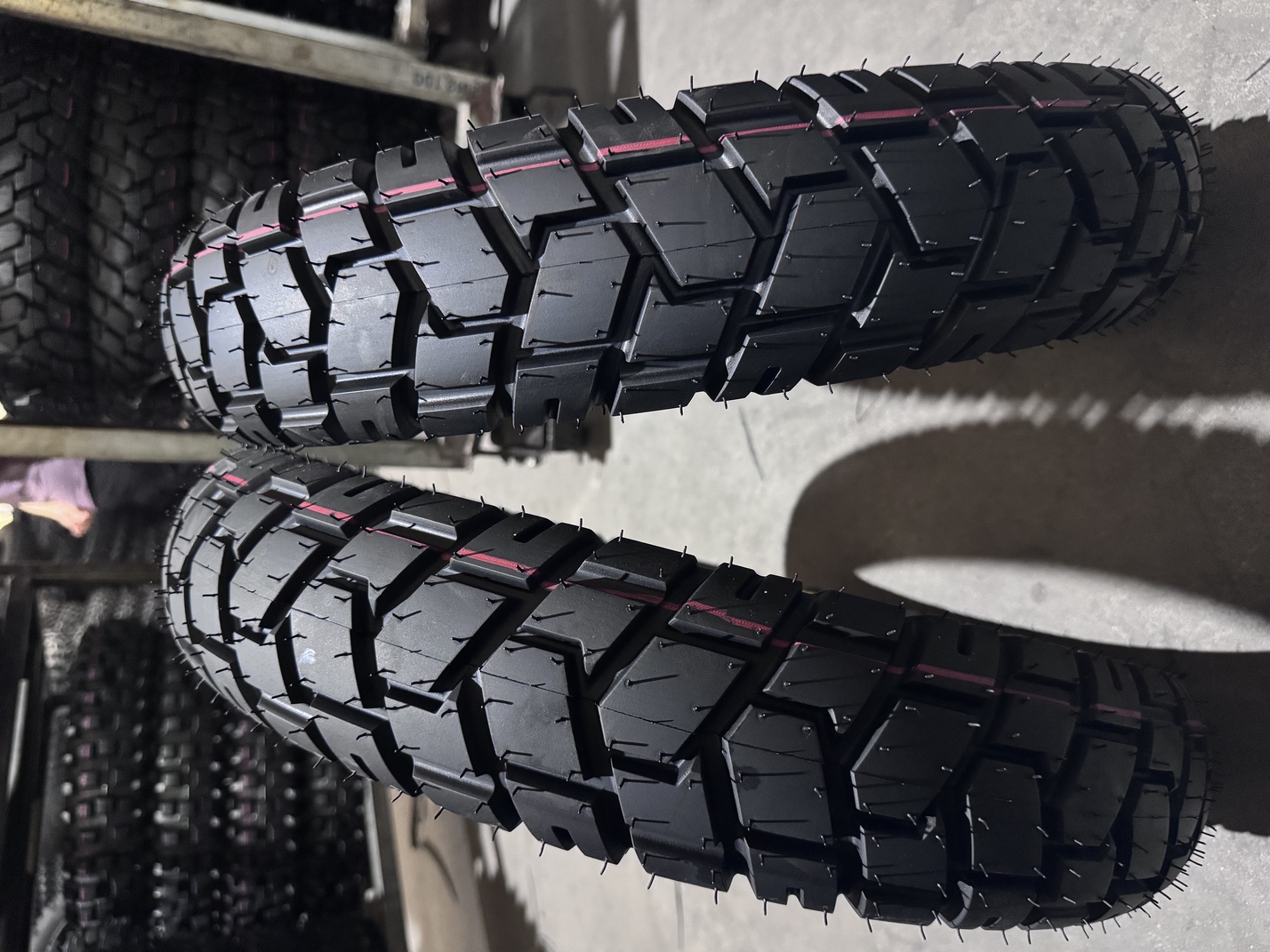
A rubber formulation cannot compensate for choosing a tread pattern that does not suit the intended application.
Street tires and off-road tires have different tread designs because they are intended to work in different environments. Buyers should therefore confirm the pattern and the compound together.
Street motorcycle tires
For tires intended primarily for paved roads, buyers should explain the expected road conditions, typical motorcycle application, target price position and any specific performance requirements.
A street-oriented pattern may be appropriate for a commuter or urban replacement market, but the correct choice still depends on the motorcycle and the approved product specifications.
Off-road motorcycle tires
Off-road applications may involve dirt, loose surfaces, gravel or other terrain. Tread geometry and the intended application become important parts of the specification discussion.
Buyers should provide the manufacturer with their target terrain and use case rather than requesting an off-road pattern based only on appearance.
Mixed-use applications
Some distributors need tires for customers who ride on both paved and unpaved roads. In these cases, the buyer should explain the expected balance between road use and off-road use.
The factory can then discuss available patterns and formulations for the selected size.
DEJI TIRE supports street and off-road tire ranges. The available pattern and compound combinations should be checked for each specific product before the order is confirmed.
4. How Should Buyers Choose Between 4PR, 6PR and 8PR?
Ply rating is another specification that should be discussed separately from natural rubber content.
DEJI's product catalogue includes motorcycle tire specifications in different ply ratings, including 4PR, 6PR and 8PR for applicable sizes.
A higher ply rating should not be selected automatically just because it sounds stronger. Buyers need to confirm the manufacturer's rated specifications, load capacity, inflation requirements and suitability for the intended motorcycle.
For example, DEJI lists multiple ply-rating options for the 90/90-18 size. Its catalogue shows 4PR and 6PR versions with different load and inflation specifications. The correct choice must follow the relevant product data and the motorcycle manufacturer's requirements.
When requesting a quotation, provide the complete requirement rather than only the tire size:
-
Tire size
-
Required ply rating
-
Tube Type (TT) or Tubeless (TL)
-
Tread pattern
-
Intended application
-
Required load and speed specifications
-
Target market
These details help the manufacturer identify the appropriate product configuration and reduce misunderstandings during ordering.
5. Six DEJI TIRE Sizes Buyers Can Explore
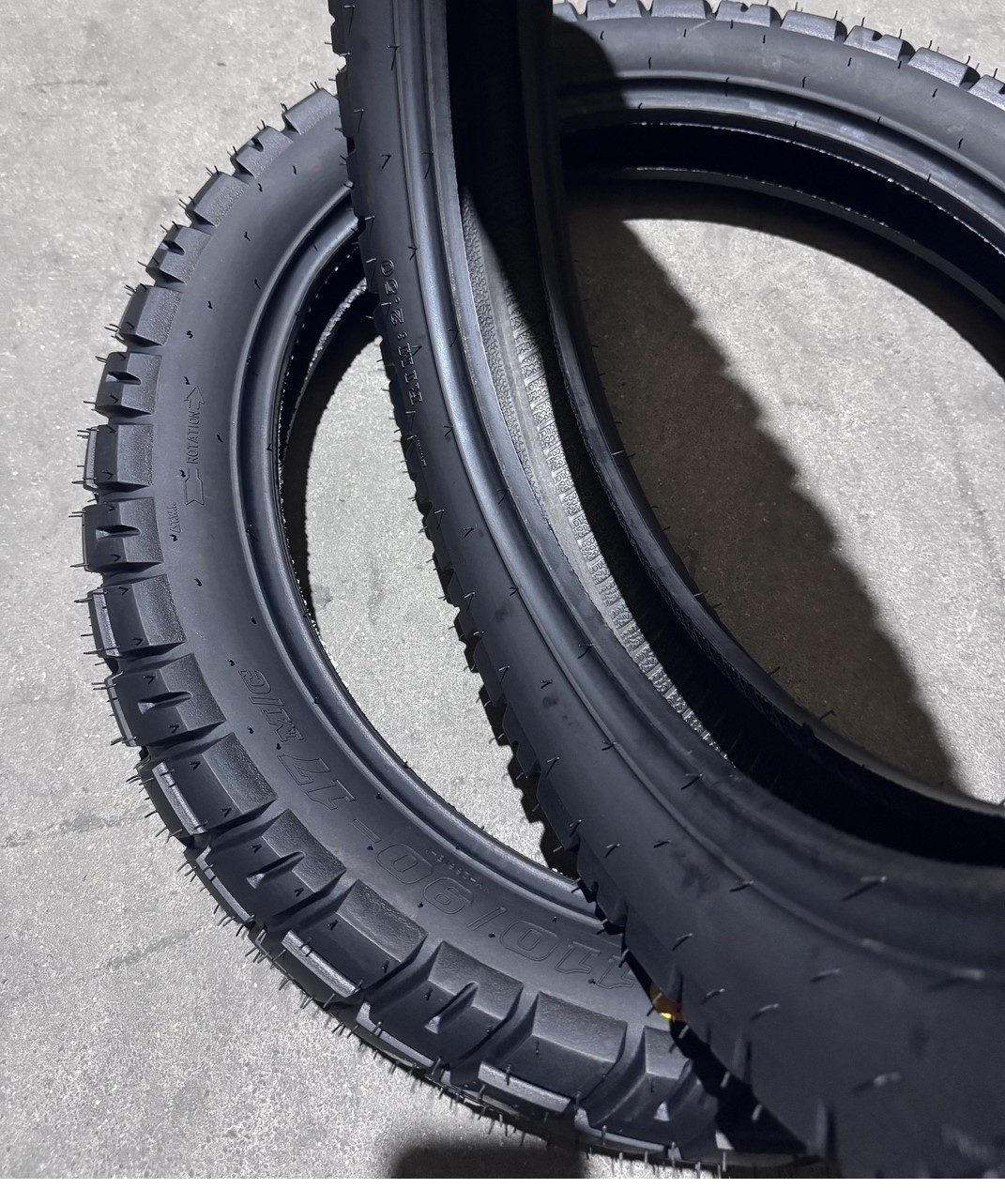
For distributors evaluating motorcycle tire products, DEJI has product pages for several sizes that can be used as starting points for a specification discussion.
These are examples of sizes in DEJI's product range, not a recommendation that every size is suitable for every market or motorcycle.
Before ordering, buyers should verify the required fitment, available construction, tread pattern, ply rating and compound options for the exact model. Do not assume every compound can be supplied in every size or construction without confirmation.
6. What Should Importers Confirm Before Approving a Sample?
A sample is useful only when it represents the product the buyer intends to purchase.
Before sample approval, importers should establish a written specification that covers the agreed product details.
Product specification
Confirm the size, tread pattern, construction type, ply rating and other applicable technical requirements.
Rubber compound
Record the agreed natural rubber content option and any confirmed formulation variant. If the buyer has a specific performance target, define how that target will be evaluated.
Sidewall branding
For private-label orders, confirm the brand name, logo artwork, markings and any applicable regulatory requirements.
Packaging
Confirm the packaging method, label information, artwork, quantities per package and any special requirements. DEJI's standard packaging is woven bags, while customized packaging can be discussed.
Quality and acceptance criteria
Agree on which specifications and inspection requirements will be used to evaluate the sample and the production order.
If the buyer requires independent testing, a specific standard or additional documentation, this should be discussed before production rather than after the goods are finished.
The approved sample and written specification should become the reference for the order.
7. How OEM Buyers Can Plan a Customized Motorcycle Tire Project
For a private-label motorcycle tire project, DEJI's current process begins by confirming the customer's brand, then the required tire size, tread pattern and production requirements.
If a new mold is needed, mold development and testing become additional steps. Buyers also need to confirm sidewall branding or labels and customized packaging before mass production.
The exact schedule depends on the project scope. DEJI's current estimates distinguish between existing-pattern orders and projects involving new development; a first OEM project requiring new mold work, testing and branding or packaging may generally take around 35–45 days. Confirm the actual schedule with the factory before committing to a launch date.
DEJI's standard motorcycle tire MOQ is generally 300 pieces per size or pattern. Buyers should confirm the exact MOQ for the selected product and customization requirements.
For a smoother OEM process, prepare the following before requesting a final quotation:
-
Brand name and logo artwork.
-
Required tire sizes and estimated quantities.
-
Preferred tread patterns or reference samples.
-
Required natural rubber content option, if specified.
-
Required ply rating and TT/TL construction.
-
Sidewall marking and packaging requirements.
-
Target market and applicable certification requirements.
-
Expected delivery schedule.
A complete request helps the manufacturer evaluate the project and provide a more relevant proposal.
8. How Can Buyers Manage Price Changes in Rubber Materials?
Rubber and other production inputs can fluctuate in price. Therefore, a quotation may not remain valid indefinitely.
For importers planning a large order, the goal should be to understand the quotation terms before placing the purchase order.
Ask the supplier to confirm:
-
The quoted price and currency.
-
Whether the quotation is based on FOB or another agreed trade term.
-
The quotation validity period.
-
Which product specifications and packaging are included.
-
Whether changes to the compound, pattern, branding or packaging would affect the price.
-
When the final price is confirmed and under what circumstances it may be revised.
For repeat orders, buyers can also discuss how future quotations will be handled if raw material prices change.
DEJI TIRE mainly quotes on an FOB basis, with packaging options available according to the project. The final price and terms should be confirmed for the specific order.
Rather than comparing only the initial unit price, importers should compare equivalent product specifications and commercial terms across suppliers.
9. What If the Delivered Product Does Not Match the Confirmed Specification?
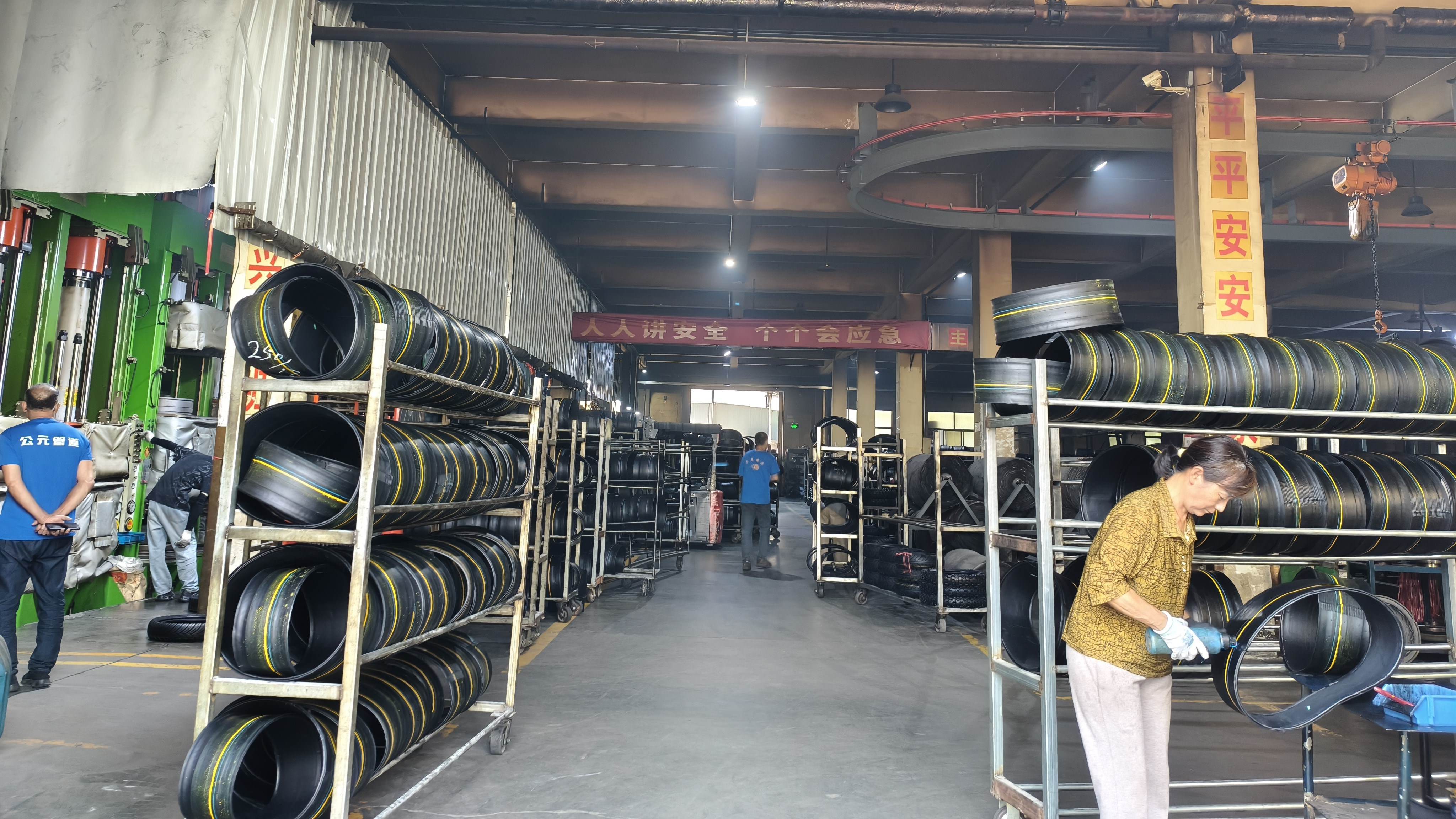
For a distributor, a product mismatch can create problems beyond the factory order. It may affect inventory planning, customer confidence and the cost of handling complaints.
Before production, buyers should retain the approved specification, sample references, packaging artwork and agreed inspection requirements.
If a quality problem attributable to DEJI or a product mismatch occurs, DEJI's stated policy is to recall the affected tires and take full responsibility. Buyers should document the applicable scope and handling procedure in the purchase agreement so both parties understand how a claim will be managed.
Clear written requirements are especially important for customized products because the buyer and manufacturer need a common reference for what was ordered and approved.
10. Questions to Ask a Motorcycle Tire Manufacturer
Before selecting a rubber compound or placing a wholesale order, ask the manufacturer:
Can you offer different natural rubber content options?
Ask which options are available for your specific tire size, tread pattern and construction.
Can I choose a custom tread pattern?
Confirm whether an existing pattern is available or whether new mold development is required.
Can I choose 4PR, 6PR or 8PR?
Availability depends on the tire size and model. Request the applicable technical specifications.
Can I order under my own brand?
Confirm sidewall branding, labels, packaging, MOQ and the development schedule.
How do you confirm product quality?
Request the available technical data, sample process and agreed inspection criteria. If particular tests or certificates are required, confirm their applicability to the exact product.
How do I receive a quotation?
Provide the tire size, quantity, tread pattern, construction, compound preference, target market, packaging and certification requirements.
Frequently Asked Questions
Does a higher natural rubber percentage always mean a better motorcycle tire?
No. Natural rubber content is only one part of the formulation. Overall performance also depends on the complete compound, tread design, construction, manufacturing process and operating conditions.
Which motorcycle tire rubber compound is best for wholesale orders?
There is no single best option for every buyer. The appropriate formulation depends on the intended application, target market, performance requirements and available product specifications. Request a model-specific recommendation and evaluate the sample.
Can DEJI TIRE customize motorcycle tire compounds?
DEJI offers natural rubber content options including 38%, 45% and 55% for applicable products. Some products also list 55% Soft and 55% Extra Soft variants. Confirm availability for the exact size and pattern.
Can I combine a custom tread pattern with my preferred compound?
This should be confirmed with DEJI for the selected product. The available combinations may depend on the tire size, pattern, construction and development requirements.
What is the MOQ for DEJI motorcycle tires?
DEJI's standard motorcycle tire MOQ is generally 300 pieces per size or pattern. Confirm the exact requirement for your selected product and OEM project.
Can DEJI provide private-label motorcycle tires?
DEJI supports OEM and ODM projects for applicable products, including branding and packaging customization. Buyers should confirm the detailed requirements, tooling needs and production schedule before ordering.
Discuss Your Motorcycle Tire Requirements with DEJI TIRE
Choosing a motorcycle tire rubber compound is part of a broader purchasing decision. For a successful wholesale or OEM order, buyers should confirm the compound, tread pattern, ply rating, construction, branding, packaging and applicable technical requirements together.
DEJI TIRE is a motorcycle tire and inner tube manufacturer based in Qingdao, China. The company supports international buyers with motorcycle tire products and OEM/ODM options for applicable projects.
If you are an importer, wholesaler, distributor or private-label brand, send us your requirements:
-
Required tire sizes
-
Estimated quantity per size
-
Preferred tread pattern
-
4PR, 6PR or 8PR requirement, if applicable
-
TT or TL construction
-
Preferred natural rubber content option
-
Target country
-
Branding and packaging requirements
Our team can check suitable product options and discuss the next steps for your wholesale or OEM project.
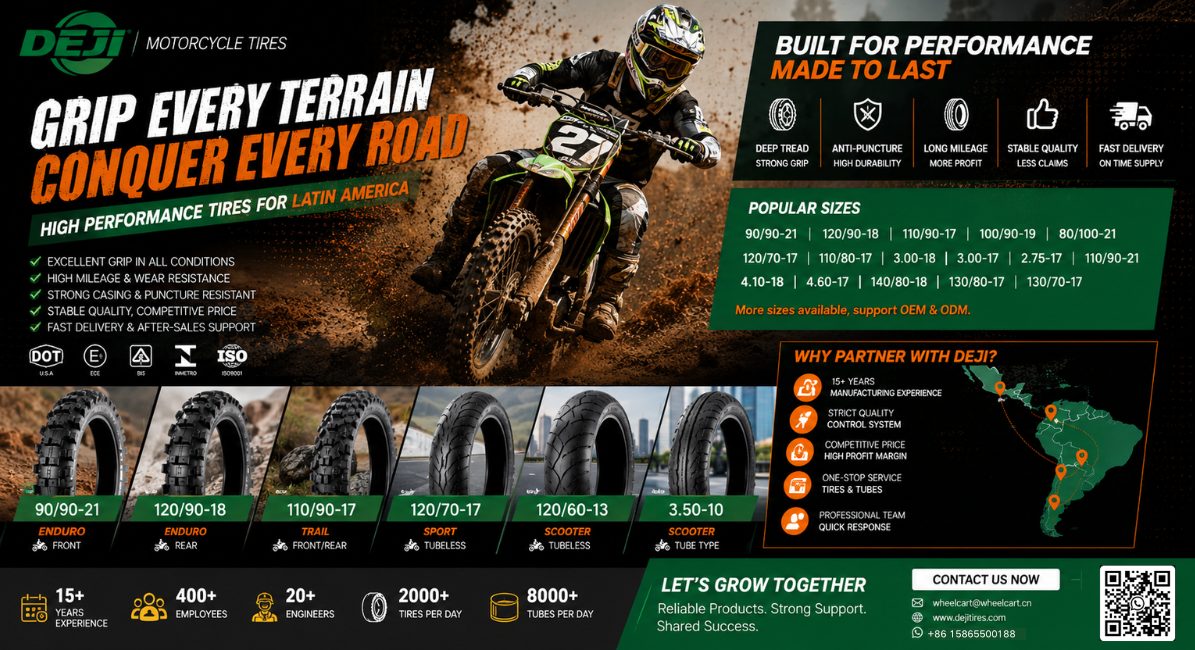
DEJI TIRE — Motorcycle Tire Manufacturer in China
OEM & ODM | Wholesale Supply | Customized Branding
Website: https://www.wheelcart.cn/
Motorcycle Tire Load Index and Speed Rating: A Guide for Importers