
Motorcycle Tire Load Index and Speed Rating: A Guide for Importers

Motorcycle Tire Load Index and Speed Rating: A Guide for Importers
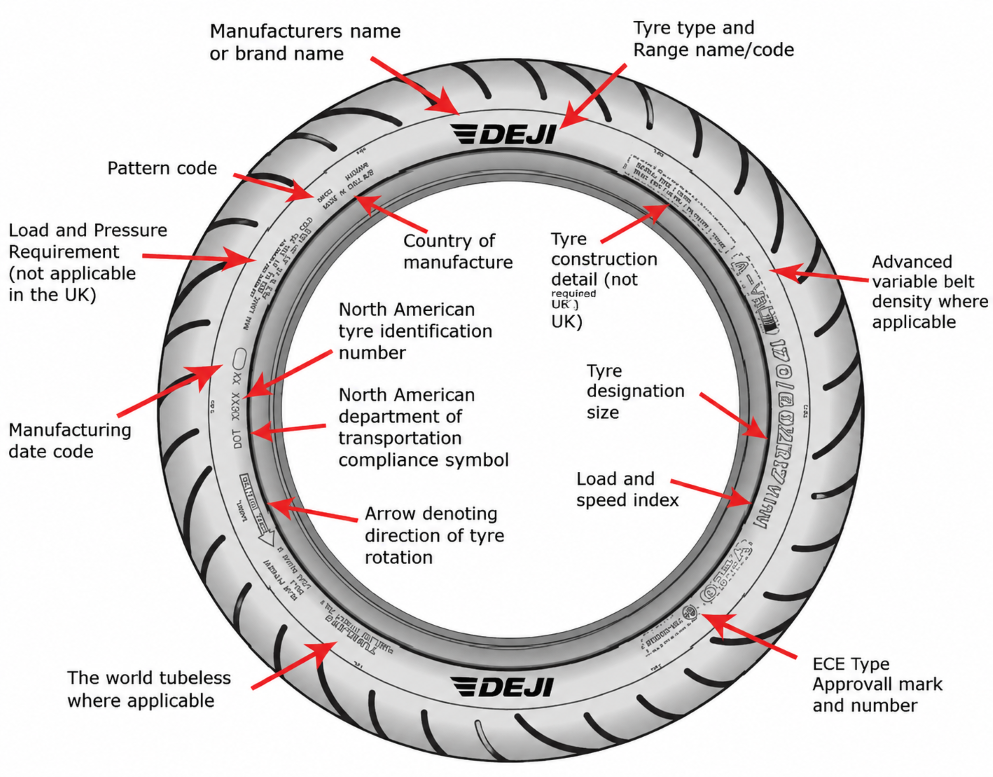
When importing motorcycle tires, confirming the tire size is only the beginning. Load index and speed rating are also important specifications that help buyers determine whether a tire is suitable for its intended application.
For motorcycle tire importers, wholesalers, distributors and private-label brands, overlooking these details can lead to specification mismatches, incorrect product listings and avoidable customer complaints.
This guide explains what motorcycle tire load index and speed rating mean, how buyers should verify them, and what information to request from a motorcycle tire manufacturer before placing a bulk order.
1. What Is the Load Index on a Motorcycle Tire?
The load index is a numerical code associated with the maximum load a tire is rated to carry under specified conditions.
It is not simply the tire's physical size, and a higher number should not be treated as a complete measure of overall tire quality.
When reviewing a motorcycle tire specification, buyers should check the load index alongside the tire size, construction, inflation requirements and intended application.
For example, a tire specification may display a marking such as 55P.
In this example, the number represents the load index, while the letter represents the speed symbol. The exact load capacity associated with a load index should be checked against the applicable standardized load index table and the manufacturer's technical documentation.
Do not estimate a tire's load capacity from its width or appearance.
Why Does Load Index Matter to Importers?
A distributor may sell the same nominal tire size in different versions with different technical specifications.
If the product listing, quotation and delivered tire do not match, the buyer may face inventory, fitment or compliance problems.
Before ordering, confirm:
-
The complete tire size
-
The specified load index
-
The applicable load capacity
-
The recommended inflation pressure
-
The intended motorcycle application
-
Any relevant market or regulatory requirements
A tire must meet the requirements of the motorcycle and its intended operating conditions. Buyers should not select a product based on load index alone.
2. What Is a Motorcycle Tire Speed Rating?
The speed rating is a letter code that indicates the tire's rated speed capability under specified test and operating conditions.
It is part of the tire's technical specification and should be checked against the requirements of the intended motorcycle.
A speed symbol is not a recommendation to ride at that speed in normal traffic. Actual safe riding speed depends on road conditions, vehicle condition, loading, tire pressure, weather and applicable laws.
Why Should Distributors Check Speed Ratings?
For importers supplying different motorcycle categories, a tire with the correct nominal size may still have a different speed rating from the product required by the customer.
This is why a product database should not record only the size.
The complete product reference should include the relevant technical markings and approved application.
Before confirming a new order, compare the supplier's specification sheet with the buyer's approved product requirements.
3. How to Read Load Index and Speed Rating Together
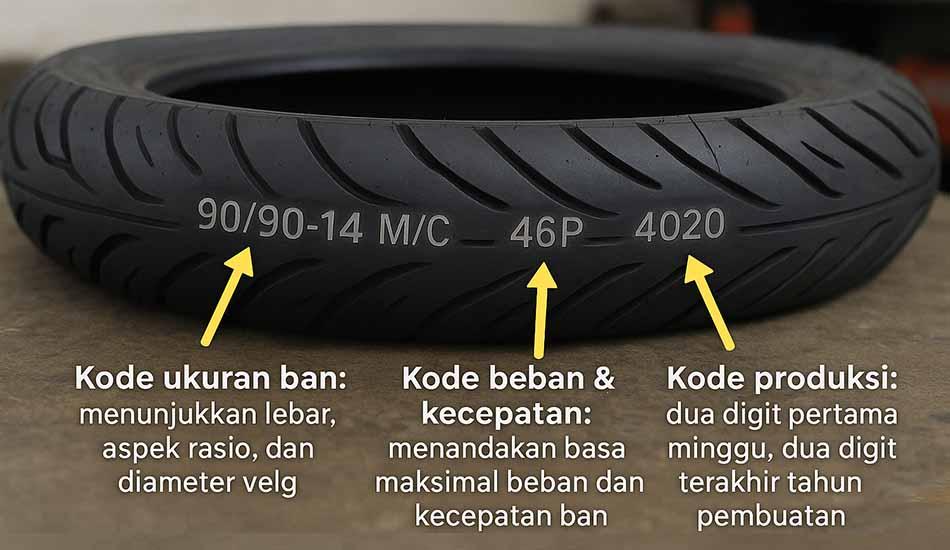
Load index and speed rating are usually presented as part of the tire's sidewall markings and technical specification.
Consider the illustrative marking:
100/90-17 55P
This example can be separated into several elements:
-
100/90: nominal tire size designation -
17: nominal rim diameter in inches -
55: load index code -
P: speed symbol
This is an example of how the marking is structured, not a recommendation for a specific motorcycle.
The precise interpretation of the complete tire marking must be confirmed using the applicable tire standard and the manufacturer's technical data.
For importers, the key lesson is that the nominal tire size does not communicate every specification needed for purchasing.
Two products with the same nominal size should not automatically be treated as identical SKUs.
4. How to Verify Tire Specifications Before Ordering
Before issuing a purchase order, buyers should request a technical specification sheet for each selected tire model.
The document should identify the product clearly and provide the relevant technical information.
Check 1: Complete Tire Size
Confirm the complete size designation, including the nominal rim diameter.
Avoid using shortened descriptions that could be confused with another product.
Check 2: Load Index
Confirm the specified load index and the corresponding rated load information.
If the intended application has a particular load requirement, make sure the selected product meets that requirement according to the applicable technical standards.
Check 3: Speed Symbol
Check the speed symbol and confirm that it is appropriate for the intended motorcycle and application.
Do not assume that every tire in the same size category has the same speed rating.
Check 4: Tire Construction
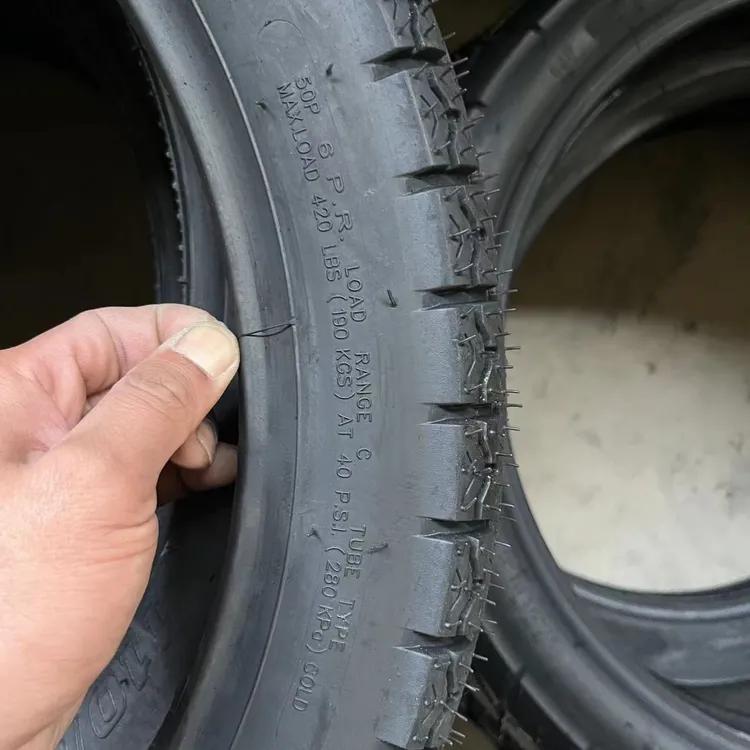
Confirm whether the product is Tube Type (TT) or Tubeless (TL), along with any other relevant construction details.
The tire must be suitable for the wheel configuration and application.
Check 5: Inflation Requirements
Verify the manufacturer's recommended inflation information for the applicable tire and load conditions.
Do not substitute a generic pressure value for the actual product specification.
Check 6: Product Identification
Confirm the tread pattern, product reference and sidewall markings.
These details help ensure that the quotation, approved sample, purchase order and delivered products refer to the same specification.
5. Why the Same Tire Size May Have Different Specifications
A nominal size is only one part of a tire's identity.
Depending on the product range, tires with the same nominal size may differ in construction, load index, speed rating, tread pattern or other technical characteristics.
These differences may affect the product's intended application and whether it meets a buyer's requirements.
For distributors, this creates an important purchasing rule:
Do not compare quotations using tire size alone. Compare the complete approved specification.
For example, if two suppliers quote the same size but provide different load or speed specifications, the products should not be treated as directly equivalent until the differences have been reviewed.
A lower unit price is not necessarily a better deal if the offered product does not match the required specification.
6. Common Specification Mistakes in Wholesale Tire Orders
Mistake 1: Recording Only the Tire Size
A spreadsheet that contains only size and price may be insufficient for managing multiple product variants.
Include the relevant load index, speed symbol, construction and product reference.
Mistake 2: Assuming a Higher Number Means a Better Tire
Load index is a technical code, not a universal quality score.
Buyers should select the specification required for the intended application rather than choosing a product based on a higher number alone.
Mistake 3: Ignoring the Speed Symbol
A product can have the correct nominal size but still fail to meet the specified speed requirement.
Confirm the speed symbol during quotation review and sample approval.
Mistake 4: Failing to Compare the Sample with the Purchase Order
A sample may be approved under a specific specification. The bulk order should identify the same approved product.
Record the product reference and the relevant technical details before mass production.
Mistake 5: Using Unverified Technical Claims in Marketing
Distributors should not advertise load capacity, speed capability or certification unless the claim is supported by the relevant product documentation.
This is particularly important for private-label products, where the buyer may be responsible for the accuracy of product listings and marketing materials.
7. A Practical Specification Checklist for Motorcycle Tire Importers
Use the following checklist when requesting a quotation from a motorcycle tire manufacturer.
| Specification | What to confirm |
|---|---|
| Product reference | Exact model or SKU |
| Tire size | Complete nominal size |
| Load index | Approved code and corresponding technical data |
| Speed symbol | Approved rating for the intended application |
| Construction | Tube Type or Tubeless |
| Tread pattern | Correct pattern reference |
| Inflation information | Manufacturer's applicable recommendation |
| Application | Motorcycle and front/rear position, where relevant |
| Compliance | Applicable destination-market requirements |
| OEM details | Approved branding and packaging, if applicable |
This checklist can be used when comparing quotations, approving samples and preparing purchase orders.
The exact technical fields required will depend on the product and destination market.
8. How Load Index and Speed Rating Affect OEM Projects
For private-label motorcycle tire projects, technical specifications should be confirmed before the product is approved for production.
An OEM project may include several sizes, tread patterns and product variants. Each variant should have a clearly identified specification.
Before production, the buyer and manufacturer should agree on:
-
The complete product size
-
Load index and speed symbol
-
Tire construction
-
Tread pattern
-
Sidewall branding
-
Packaging requirements
-
Applicable technical and compliance documents
-
Sample approval and change-control procedures
If the buyer changes a specification after the product has been approved, the change should be reviewed and documented before production proceeds.
This helps reduce the risk of differences between the approved sample, the purchase order and the final delivery.
9. How DEJI TIRE Supports Technical Specification Confirmation
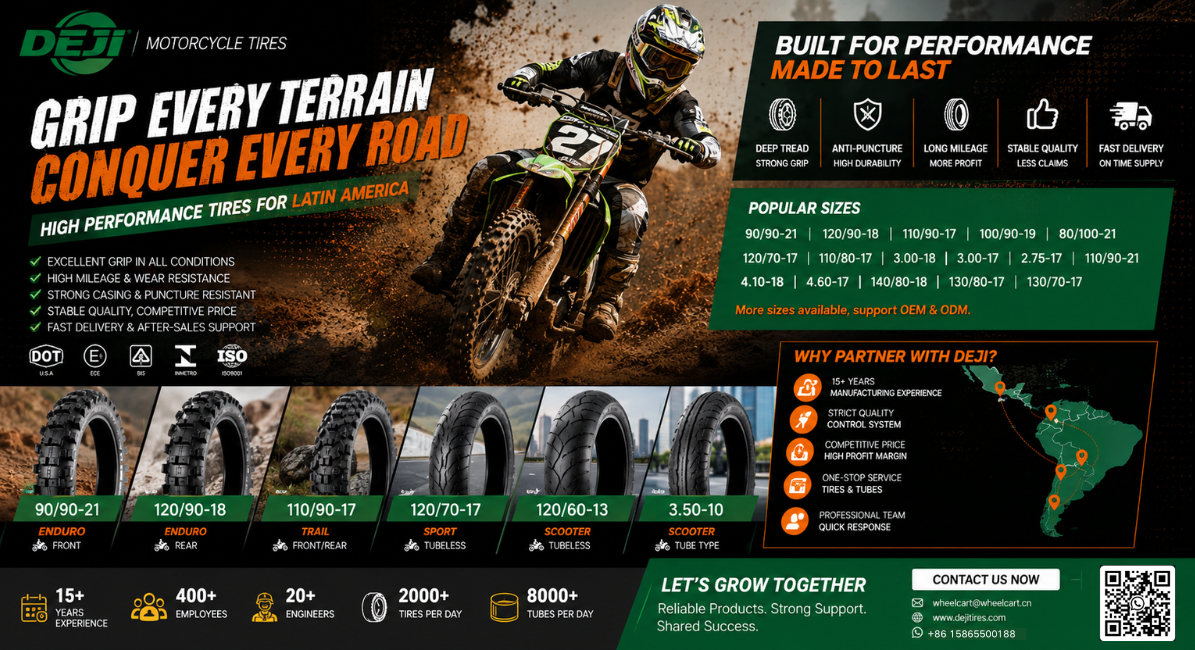
DEJI TIRE is a tire manufacturer based in Qingdao, China, supplying motorcycle tires and inner tubes to international buyers.
The company's published product information includes technical details such as tire size, load index, speed rating, construction and inflation specifications for applicable products.
For importers, wholesalers, distributors and private-label brands, the practical next step is to identify the exact product and request its current technical data.
When contacting DEJI TIRE, provide:
-
Required tire sizes
-
Preferred tread patterns or product references
-
Intended application
-
Required load and speed specifications
-
Tube Type or Tubeless requirements
-
Target country
-
Estimated order quantity
-
OEM branding and packaging requirements, if applicable
The team can then check the relevant product options and discuss specifications, samples and commercial terms.
Product details should be confirmed for the selected model rather than assumed to apply to the entire tire range.
Frequently Asked Questions
What does the load index on a motorcycle tire mean?
It is a numerical code associated with the tire's rated load capacity under specified conditions. Use the applicable load index table and manufacturer's technical data to identify the corresponding value.
What does the speed rating on a motorcycle tire mean?
It is a letter code representing the tire's rated speed capability under specified conditions. The required rating depends on the motorcycle, application and applicable specifications.
Can two motorcycle tires with the same size have different load indexes?
Yes. Nominal size alone does not guarantee that two tires have identical technical specifications. Compare the complete product markings and technical documents.
Should I choose the highest load index available?
Not automatically. Choose a tire that meets the motorcycle manufacturer's requirements and the intended application. A higher code by itself does not establish overall product suitability.
Is a tire's speed rating a recommended riding speed?
No. It is a technical rating under specified conditions, not a recommendation to ride at that speed in everyday traffic.
What information should a tire importer request from a supplier?
Request the complete tire size, load index, speed symbol, construction, relevant inflation information, product reference and applicable technical documents.
Why should OEM buyers confirm load and speed specifications before production?
Because the specifications form part of the approved product definition. Confirming them before production helps align the sample, purchase order, sidewall markings and delivered goods.
Confirm the Right Motorcycle Tire Specification Before Ordering
For motorcycle tire importers, choosing the correct product requires more than checking the nominal size.
Load index, speed rating, construction and application should be reviewed together to ensure that the selected product matches the buyer's requirements.
DEJI TIRE welcomes inquiries from importers, wholesalers, distributors and private-label brands seeking motorcycle tire products and OEM/ODM cooperation.
Send us your required sizes, target market, estimated quantities and technical requirements to discuss suitable product options.
DEJI TIRE
Motorcycle Tire Manufacturer in China
OEM & ODM | Wholesale Supply | International B2B Cooperation
Website: https://www.wheelcart.cn/
Motorcycle Tire Inventory Planning: How Importers Can Manage Stock and Reorders